
Solar battery banks supply stored energy to appliances, but they do not distribute this power randomly. Every system follows a hierarchy that determines which loads receive power first and how long those loads continue running. Understanding this hierarchy helps households plan more effectively during outages, reduce unnecessary energy waste, and match system behavior with real-life priorities. A modern system, such as the Anker SOLIX F3000, paired with a 400W portable solar panel, demonstrates how load management becomes clearer when capacity, input, and usage patterns align. When users understand how battery banks choose what to power, they gain the confidence to create predictable backup plans and daily energy strategies that support essentials without overextending their stored energy.

How Solar Battery Banks Decide Which Loads Come First
Essential Loads Receive Priority to Protect Household Needs
Solar battery banks typically treat certain appliances as essential because they support basic comfort, safety, and daily continuity. Refrigerators, medical devices, communication tools, lighting, and similar equipment usually receive top priority in user planning. Systems with smart energy optimization, such as the F3000, make powering essentials easier because they deliver stable output for long durations. With low idle consumption, the F3000 can keep an 8 cu.ft refrigerator running during outages, which demonstrates how essential loads remain preserved even when other devices are turned off. When users configure their system with this mindset, they prevent critical appliances from losing power unexpectedly.
High-Demand Loads Follow Only When Capacity Allows
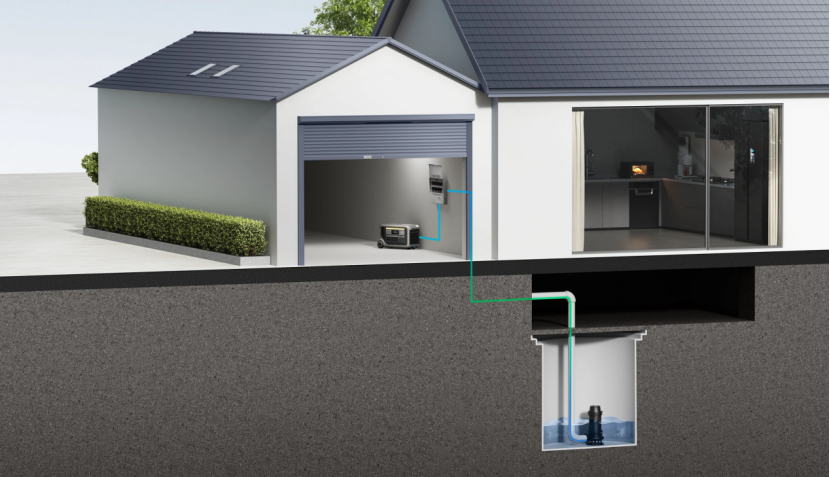
Large appliances affect load priority because they require more power to start or maintain operation. Devices that draw heavy wattage, such as heaters, well pumps, or high-capacity cooking tools, may only run when the battery bank has enough available output. The F3000 supports 120V essentials and can pair with a second unit for 240V high-demand loads, which gives users flexible options without overwhelming a single system. By understanding which appliances fall into this category, households learn to schedule usage around available sunlight or battery charge levels. This approach also reduces stress on the system and ensures that essential devices remain powered without interruption.
Load Shedding Helps Conserve Power for Higher-Priority Devices
Solar battery banks use load shedding—manually or automatically—to preserve energy for the most important tasks. When the battery approaches low capacity, or multiple devices compete for power, lower-priority loads may be shut off first. This process extends the runtime for critical appliances and prevents overloads. Users can participate in load shedding by unplugging devices, managing usage through smart settings, or shifting tasks to daylight hours. The F3000’s ability to work seamlessly with solar input means shedding can happen strategically rather than urgently. As sunlight replenishes the system, loads can be restored without relying on aggressive conservation measures. Load shedding becomes not a failure point but a planning tool for steady, predictable energy use.
How Smart Management Improves Household Planning
Real-Time Monitoring Helps Users Adjust Priorities Quickly
Solar battery banks with modern interfaces make load management easier by showing users how much power each appliance consumes. Monitoring tools reveal which devices drain energy faster than expected and which ones operate efficiently. The F3000’s smart optimization capabilities provide this kind of visibility, allowing households to make informed decisions. Users can identify high-demand appliances, refine usage habits, and adjust priorities instantly during outages. Real-time monitoring also helps determine whether solar panels supply enough energy to balance current load patterns. With this information, households create dynamic energy plans that adapt to weather, household activity, and storage levels.
Efficient Solar Input Supports Consistent Load Availability
Strong solar input helps reduce stress on stored energy and expands the flexibility of load priorities. When panels capture more sunlight, essential loads remain stable while secondary loads can run during the day without draining the battery deeply. The F3000’s dual-voltage solar input supports up to 2,400W, giving households a reliable stream of incoming power. This makes it easier to keep vital appliances operating without strict rationing. It also allows users to schedule energy-heavy tasks during hours of high production. With portable panels, repositioning for optimal sunlight is straightforward, which increases the system’s ability to support demands throughout the day.
Daily Routines Become More Predictable With Thoughtful Load Planning
When households understand load priority behavior, energy routines become clearer and less stressful. People learn to match tasks with available sunlight, schedule high-demand activities appropriately, and rely on stored energy confidently. The F3000’s low idle draw and strong pass-through charging support this predictability by keeping standby usage minimal and ensuring devices run at full speed even while the system recharges. Users begin viewing their energy consumption as a coordinated process rather than a reactive one. This shift promotes consistency during outages and improves everyday efficiency in normal operation. Over time, these predictable habits reinforce the value of having a dependable solar power bank that manages household loads intelligently.
Conclusion
Solar battery banks manage load priorities through a balance of essential requirements, system capacity, and user-defined behaviors. Essential appliances receive top priority, high-demand loads run only when conditions allow, and load shedding helps protect limited reserves during extended outages. Smart systems strengthen these decisions by offering real-time monitoring, stable solar input, and flexible output options. The Anker SOLIX F3000 with its 400W portable solar panel shows how modern design simplifies these priorities by delivering strong charging performance, scalable power, and dependable standby behavior. When households understand how load management works, they plan better, conserve energy strategically, and maintain reliable power even when the grid is unavailable.